
Finding the best backpacking tent is a completely different challenge than buying a shelter for your car. Unlike the heavy, spacious family tents you drive to a campsite, a backpacking tent must be light enough to carry for miles and durable enough to protect you when the weather turns . If you are searching for a shelter that fits into a 50-liter pack, sets up at dusk after a long day of hiking, and keeps you dry without weighing you down, you are in the right place.
This guide is the ultimate resource for backpackers who refuse to compromise on comfort for weight. We have researched the top models on the market, analyzing crucial metrics like trail weight, packed size, vestibule space, and weather resistance . Whether you are a solo thru-hiker looking for a sub-2-pound trekking-pole shelter or a weekend warrior who needs a freestanding tent for two, this guide will help you cut through the marketing noise. We focus on what actually matters on the trail: livability, durability, and ease of setup. By the end of this article, you will have all the information you need to make a confident buying decision and find the perfect home away from home for your next backcountry adventure.
Comparison Table :
|
Feature |
Night Cat (Single Layer) | Clostnature Polaris (2-Person) |
BISINNA (2-Person) |
|
Best For |
Solo backpackers on a budget | Couples wanting space & durability |
Budget 2-person trips |
|
Capacity |
1 Person (tight for 2) | 2 Person |
2 Person |
|
Weight |
2.0 kg (4.4 lbs) | 2.4 kg (5.3 lbs) |
2.2 kg (4.85 lbs) |
|
Packed Size |
42 x 12 x 12 cm | 42 x 15 x 15 cm | 42 x 15 x 15 cm |
|
Floor Dimensions |
220 x 120 cm | 220 x 150 cm |
210 x 140 cm |
| Peak Height | 120 cm | 115 cm |
110 cm |
|
Doors / Vestibules |
1 Door / 0 | 2 Doors / 2 Vestibules | 2 Doors / 2 Small |
| Pole Material | Fiberglass | Aluminum |
Aluminum |
|
Waterproof Rating |
PU 3000mm | PU 5000mm | PU 3000mm |
| Seasons | 3-4 Season (Single Wall) | 3 Season (Double Wall) |
3 Season (Double Wall) |
|
Key Pro |
Ultralight & cheapest | Best space, durability & features | Good balance of weight & price |
| Key Con | Single wall (condensation risk) | Heavier packed weight |
Slightly smaller interior |
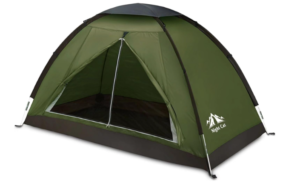
1. Night Cat Single-Layer Backpacking Tent (1-Person)
 Specification
|
Specification |
Details |
| Model |
Night Cat ZP-10 (ASIN: B07WR1V29Y) |
|
Capacity |
1 person (can squeeze 2 people, but very cramped) |
| Weight |
Approx. 2 kg (4.4 lbs) |
|
Packed Size |
42 x 12 x 12 cm |
| Unfolded Dimensions |
220 x 120 x 120 cm (L x W x H) |
|
Number of Doors |
1 |
| Pole Material |
Fiberglass |
|
Fabric |
190T Nylon (outer), Oxford cloth (bottom) |
| Waterproof Rating |
PU 3000mm |
|
Seasons |
3-season (suitable for spring, summer, autumn) |
| Included Accessories |
Tent body, fiberglass poles, stakes, guylines, storage bag |
Pros:
- Lightweight and Compact: At approximately 2 kg with a packed size of only 42 x 12 x 12 cm, it fits easily into a backpack side pocket or bottom compartment.
- Quick Setup: The two-pole diagonal design is very simple, suitable for quick deployment or beginners.
- Affordable Price: As an entry-level model, the price is low (some platforms show around $40), offering high value for money.
Cons:
- Single-Layer Condensation: This is the biggest drawback of single-layer tents. Overnight, moisture from breathing can condense on the inner wall, and poor ventilation may cause sleeping bags to get damp.
- Poor Wind Resistance: Some users report that the included stakes have limited holding power, and the tent is prone to deformation or even being blown away in strong winds, so additional guylines and sturdy stakes are recommended.
- Durability Concerns: The fiberglass poles and relatively thin fabric (190T nylon) have average durability, making them unsuitable for harsh environments or frequent heavy use.
Our through:
Product Overview The Night Cat single-layer backpacking tent is a cost-effective solo shelter. It uses a single-layer design and weighs approximately 2 kg, making it an entry-level option for beginners or lightweight hikers with limited budgets. The tent features a compact footprint (2.2 x 1.2 m), offering basic sleeping space for one person plus gear.
Setup and Design The setup is very straightforward: simply thread two fiberglass poles diagonally through the sleeves, a process that takes about 1-2 minutes. The poles are covered with a protective sleeve design, which reduces the risk of fiberglass splinters injuring hands during assembly. The tent body features mesh doors and a roof vent to ensure basic ventilation.
Waterproof Performance The fabric is treated with PU 3000mm waterproof coating, and the seams are taped. It can handle moderate to heavy rain in theory, but user feedback suggests that the single-layer design is prone to condensation in humid conditions or temperature fluctuations, and the interior walls may feel damp.
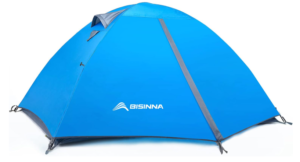
2. BISINNA 2-Person Backpacking Tent
Specifications
|
Specification |
Details |
|
Capacity |
2 person (recommended for 1 person + gear) |
| Weight |
Approx. 2.2 kg (4.85 lbs) |
|
Packed Size |
42 x 15 x 15 cm (16.5 x 5.9 x 5.9 in) |
| Unfolded Dimensions |
210 x 140 x 110 cm (L x W x H) |
|
Doors |
2 (D-shaped, dual zipper) |
| Pole Material |
7001 Aluminum alloy |
|
Rainfly Fabric |
190T Polyester, PU3000mm |
| Floor Fabric |
210D Oxford |
|
Seasons |
3-season |
| Included |
Tent, rainfly, 2 aluminum poles, 10 stakes, 2 guylines, carry bag |
Pros:
- Excellent value: Offers double-wall design and aluminum poles at a very low price point .
- Lightweight and compact: At ~2.2 kg, it fits easily into a backpack side pocket .
- Quick setup: Two-pole design with sleeves pitches in under 5–10 minutes .
- Good ventilation: Full mesh inner and two doors provide strong airflow .
Cons:
- Tight for two: Realistically fits one person plus gear; two adults will have no room for bags .
- Small vestibules: The two porches are minimal and cannot store large packs .
- Durability concerns: Some users report zipper failures after extended use, and included stakes are basic .
- Wind intrusion: The design can let cold wind underneath in exposed, chilly conditions
Our through:
Product OverviewThe BISINNA 2-person backpacking tent is a budget-friendly double-wall shelter designed for three-season adventures. It weighs approximately 2.2 kg (4.85 lbs) and packs down to a compact 42 x 15 x 15 cm, making it a viable option for short backpacking trips and festival camping . The interior measures 210 x 140 x 110 cm, which is spacious for one person with gear or snug for two adults .
Design and Ventilation This tent features a double-layer construction: a breathable mesh inner tent and a separate waterproof rainfly. The large mesh panels provide excellent airflow, and the two D-shaped doors allow easy entry and exit from either side . Reviewers frequently praise the ventilation, noting the tent stays cool in warm weather and manages condensation reasonably well for its price point .
Weather Protection The rainfly uses 190T polyester with a PU3000mm coating, and the floor is made from durable 210D Oxford fabric with taped seams . The tent uses aluminum poles rather than fiberglass, which adds durability and wind resistance. Users report surviving heavy rain and strong winds without leaks, though some note the small vestibules offer limited protection for gear .
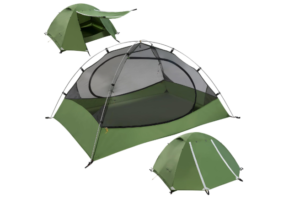
3. Clostnature 2-Person Backpacking Tent
Specification
|
Specification |
Details |
| Model |
Clostnature Polaris 2-Person |
|
Capacity |
2 person (comfortable for 1 + gear) |
| Weight |
Approx. 2.4 kg (5.3 lbs) |
|
Minimum Trail Weight |
2.05 kg (fly, inner, poles only) |
| Packed Size |
42 x 15 x 15 cm (16.5 x 5.9 x 5.9 in) |
|
Unfolded Dimensions |
220 x 150 x 115 cm (7’3″ x 4’11” x 3’10”) |
| Doors |
2 (D-shaped) |
|
Vestibules |
2 (small) |
| Pole Material |
7001 Aluminum |
|
Rainfly Fabric |
210T Polyester, PU 5000mm |
| Floor Fabric |
Polyester, PU 5000mm |
|
Seasons |
3-season |
|
Included |
Tent, rainfly, 2 aluminum poles, 14 stakes, 4 guylines, repair kit, carry bag |
Pros:
- Excellent waterproofing: PU 5000mm coating outperforms many tents in its price range .
- Lightweight and compact: At ~2.4 kg with a small packed size, it fits easily into a backpack .
- Quick setup: Freestanding design with aluminum poles and clips pitches in about 2–10 minutes, even for beginners .
- Two doors and two vestibules: Rare at this price point; provides convenience and gear storage for two people .
Cons:
- Tight for two with gear: Realistically comfortable for one person plus gear, or two people sleeping snugly .
- Vestibules are small: Cannot fit large backpacking packs; gear may get wet from condensation touching the tent walls .
- Included stakes are weak: Users report the stakes bend easily on hard ground; replacing them is recommended .
- Durability concerns: Some long-term users report pole breakage or zipper issues after extended use .
Our through:
Product Overview The Clostnature Polaris is a lightweight, freestanding two-person tent designed for three-season backpacking. It weighs approximately 2.4 kg (5.3 lbs) and packs down to a compact 42 x 15 x 15 cm, making it a practical choice for hikers who need a balance between interior space and pack weight . The tent measures 220 x 150 x 115 cm inside, offering enough room for two adults to sleep comfortably with a small amount of gear .
Design and Ventilation This tent features a double-wall construction with a full-mesh inner tent and a separate rainfly. The mesh walls provide excellent airflow and stargazing views, while two ventilation windows on the rainfly help reduce condensation—a feature that is uncommon at this price point . The tent has two D-shaped doors and two vestibules, giving each camper their own entry and a place to store boots or a backpack outside the sleeping area .
Weather Protection The rainfly and floor use 210T polyester with a PU 5000mm coating, and the seams are factory-sealed. This level of waterproofing is notably high for a budget tent and has been praised in user reviews for keeping campers dry during heavy rain . The tent uses 7001 series aluminum poles rather than fiberglass, which adds durability and reduces weight.
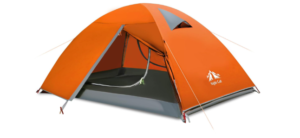
4.Night Cat Upgraded Backpacking Tent
Specification
|
Specification |
Details |
|
Model |
Night Cat Upgraded Backpacking Tent (ZP-30) |
| Capacity |
1 person (fits 1 adult + 1 child snugly) |
|
Weight |
Approx. 2 kg (4.4 lbs) |
| Packed Size |
42 x 12 x 12 cm (16.5 x 4.7 x 4.7 in) |
|
Unfolded Dimensions |
210 x 115 x 115 cm (7 x 3.8 x 3.8 ft) |
| Doors |
1 |
|
Pole Material |
Fiberglass (covered) |
| Rainfly Fabric |
210T Polyester, PU 3000mm |
|
Floor Fabric |
150D Oxford, PU 3000mm |
| Seasons |
3-season |
|
Included |
Tent, poles, stakes, guylines, carry bag |
Pros:
- Fast setup: Clip system pitches in about 1 minute, no sleeve-threading required .
- Lightweight and compact: At 2 kg with a small packed size, it suits backpacking and bikepacking .
- Solid waterproofing: PU 3000mm coating and taped seams handle heavy rain .
- Hand protection: Covered poles prevent fiberglass splinters .
Cons:
- Snug for two: Realistically a one-person tent; two adults will be cramped .
- Fiberglass poles: Less durable than aluminum; some users report wind instability in exposed conditions .
- Limited vestibule: The small porch area fits shoes but not a large backpack .
- Single-wall condensation: Like most budget solo tents, interior moisture can build up in humid or cold conditions.
Our through:
Product Overview
The Night Cat Upgraded Backpacking Tent is a lightweight solo shelter designed for hikers who want a quick, no-fuss setup. It weighs approximately 2 kg (4.4 lbs) and packs down to a compact 42 x 12 x 12 cm, making it easy to strap to a backpack or motorcycle . The interior measures 210 x 115 x 115 cm, which comfortably fits one adult with gear, or one adult and a small child .
Design and Setup
Unlike traditional tents that require threading poles through sleeves, this model uses tent clips that attach directly to the poles. This clip-based system allows for assembly in about one minute, even for beginners . The fiberglass poles are fully covered with protective sleeves to prevent splinters during setup .
Weather Protection and Ventilation
The rainfly is made from 210T polyester with PU 3000mm coating, and the floor uses 150D Oxford fabric, also rated to PU 3000mm. All seams are taped to keep water out during heavy rain . A large mesh door and a roof vent provide airflow to reduce condensation, while keeping insects out .
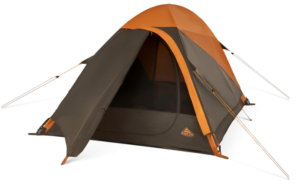
5. Kelty Grand Mesa 2
Specification
|
Specification |
Details |
|
Capacity |
2 person (best for 1 + gear) |
| Seasons |
3-season |
|
Minimum Trail Weight |
4 lb 1 oz / 1.84 kg |
| Packaged Weight |
4 lb 12 oz / 2.15 kg |
|
Packed Size |
16 x 7 x 7 in / 41 x 18 x 18 cm |
| Floor Dimensions |
85 x 57 in (head) / 44 in (foot) |
|
Floor Area |
30 ft² / 2.79 m² |
| Peak Height |
43 in / 109 cm |
|
Doors / Vestibules |
1 door / 1 vestibule |
| Poles |
2 aluminum poles |
|
Wall Material |
68D Polyester / No-see-um mesh |
| Floor Material |
68D Polyester / 1200mm |
|
Fly Material |
68D Polyester / 1200mm, DWR |
| Included |
Tent, rainfly, poles, stakes, Shark Mouth carry bag |
|
Footprint |
Sold separately |
Pros:
- Fast setup: Quick-Corner pockets and clip attachment make pitching intuitive and quick (3–5 minutes)
- Solid value: Aluminum poles and sealed seams at a budget price point (typically $140–$150)
- Reliable weather protection: Taped seams and DWR coating handle rain well for its class
- Compact pole segments: Short packed length (~16″) suits bikepacking and motorcycle camping
Cons:
- Tight for two: Realistically a spacious one-person tent; two adults will be cramped with gear
- Pole durability concerns: Multiple user reports of poles breaking or shattering, sometimes on first use
- Small vestibule: Fits shoes but not large backpacks
- Relatively heavy: At ~4 lbs trail weight, it is not ultralight compared to premium backpacking tents
Our through:
Product Overview The Kelty Grand Mesa 2 is a budget-friendly, three-season backpacking tent built for trail reliability. It weighs 4 lb 1 oz (1.84 kg) at minimum trail weight and packs down to 16 x 7 x 7 inches, making it a practical choice for beginner backpackers and weekend warriors . The interior offers 30 square feet of floor space with a peak height of 43 inches, which is roomy for one person with gear but snug for two adults .
Design and Setup Kelty’s Quick-Corner Technology uses pre-attached corner pockets that hold the aluminum poles upright during setup, significantly speeding up the pitching process. Users report setup times of 3 to 5 minutes . The tent features a single door and a single EZ-Zip vestibule with fully taped seams, providing a covered area for boots and small gear outside the sleeping space .
Weather Protection The rainfly and floor use 68D polyester with a 1200mm coating and PFC-free DWR treatment. Seams are fully sealed. While the waterproof rating is lower than some competitors, user reviews consistently report staying dry in heavy rain, with one noting “rain sideways for hours” and gear remaining “bone dry” . Mesh walls provide ventilation to manage condensation
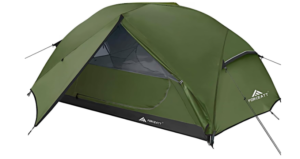
6. Forceatt 2-Person Backpacking Tent
Specification
|
Specification |
Details |
| Capacity |
2 person (best for 1 + gear) |
|
Seasons |
3-4 season |
| Weight |
Approx. 2.58 kg (5.68 lbs) |
|
Packed Size |
41 x 14 cm |
| Unfolded Dimensions |
220 x 130 x 110 cm |
|
Doors / Vestibules |
2 doors / 2 vestibules |
| Pole Material |
7001 Aluminum |
|
Rainfly / Floor |
Polyester, PU3000-PU5000 |
| Seams |
Taped |
|
Included |
Tent, poles, stakes, guylines, carry bag |
Pros:
- Easy setup: Double-Y pole and clip system pitches in under 5 minutes
- Compact and portable: Packs small enough for motorcycle panniers and short backpacking trips
- Solid weather protection for the price: PU3000+ coating and taped seams handle rain well
- Two doors and two vestibules: Convenient for two people at a very low price point
Cons:
- Tight for two: Realistically a spacious one-person tent; two adults will be cramped with gear
- Pole durability issues: Multiple reports of pole joints failing after extended use, with no replacement parts available
- Not truly ultralight: At ~5.7 lbs, it is heavier than dedicated backpacking tents
- Thin floor: Users recommend adding a footprint or tarp for protection
Our through:
Product Overview The Forceatt 2-person backpacking tent is a budget-friendly, freestanding shelter designed for beginner backpackers and casual campers. It weighs approximately 2.58 kg (5.68 lbs) and packs down to 41 x 14 cm, making it compact enough for motorcycle camping and short backpacking trips . The interior measures 220 x 130 x 110 cm, which is roomy for one person with gear but tight for two adults side by side .
Design and Setup The tent uses a single-pole double-Y aluminum design that clips onto the inner tent, allowing setup in about 3 to 5 minutes even for beginners . It features two D-shaped doors and two vestibules, giving each camper their own entry and a small covered area for shoes or a backpack . A large mesh window and ceiling vents provide airflow to manage condensation .
Weather Protection The rainfly and floor use polyester fabric with PU3000-PU5000 coating, and seams are taped. The bathtub-style floor adds ground protection . User reviews report staying dry in heavy rain, with one noting “no leaks in 12 hours of constant torrential rain” . However, long-term durability is a concern—some users report pole joints failing after about a year of regular use, and the company does not sell replacement poles .
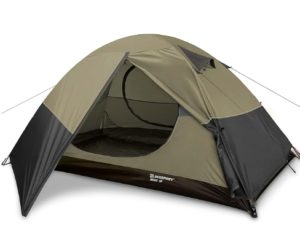
7. Bes sport 2-Person Backpacking Tent
Specification
|
Specification |
Details |
| Capacity |
2 person (best for 1 + gear) |
|
Seasons |
3-4 season |
| Weight |
Approx. 2.35 kg (5.2 lbs) |
|
Interior Dimensions |
220 x 123 x 110 cm (86.6 x 48.4 x 43.5 in) |
| Doors / Vestibules |
2 doors / 2 vestibules |
|
Pole Material |
8.5mm 7001 Aluminum |
| Rainfly Fabric |
68D Polyester, PU 3000mm+ |
|
Floor Material |
Welded Oxford |
| Seams |
Fully taped |
|
Included |
Tent, rainfly, poles, 12 stakes, 4 guylines, carry bag |
Pros:
- Fast, intuitive setup: Single-pole clip system pitches in about 5 minutes; easy even in the dark
- Two doors and two vestibules: Convenient for two people at a very low price point
- Solid weather protection for the price: PU 3000mm+ coating and taped seams handle rain well
- Good ventilation: Large mesh areas and ceiling vents reduce condensation
Cons:
- Tight for two with gear: Realistically comfortable for one person plus gear, or two people sleeping snugly
- Durability concerns: Some users report fabric fraying after extended use and occasional quality control issues with stitching
- Not truly ultralight: At ~5.2 lbs, it is heavier than dedicated backpacking tents
- Footprint sold separately: Adds extra cost for floor protection.
Our through
Product Overview The Bessport 2-person backpacking tent is a budget-friendly, freestanding shelter built for beginner backpackers and casual campers. It weighs approximately 2.35 kg (5.2 lbs) and packs down compactly, making it a practical choice for short backpacking trips and motorcycle camping . The interior measures 220 x 123 x 110 cm, offering enough room for two adults to sleep side by side, though space becomes tight once gear is brought inside .
Design and Setup The tent uses a single aluminum pole with clip attachments, allowing setup in about 5 minutes even for beginners. The freestanding design means you can move the tent to find the perfect spot before staking it down . Two D-shaped doors and two vestibules give each camper their own entry and a small covered area for boots or a backpack .
Weather Protection The rainfly and floor use 68D polyester with welded seams and a waterproof rating of PU 3000mm or higher, with some listings claiming 5000mm . The bathtub-style welded floor adds ground protection. User reviews report staying dry in heavy rain, with one noting “zero leaks” after torrential downpours . Mesh panels and two ceiling vents provide airflow to manage condensation
Backpacking Tent Buyer’s Guide: What Actually Matters on the Trail
Choosing the best backpacking tent isn’t about finding the one with the most features—it’s about finding the right balance for how you actually travel. Unlike car camping, every ounce and every inch of packed space matters when you’re carrying your shelter on your back. Here’s what to prioritize before you buy.
Weight and Packed Size: The Real Cost of Comfort
Weight is the first thing experienced backpackers look at, but it’s important to understand what the numbers mean. Manufacturers list two figures: minimum trail weight (tent body, rainfly, and poles only) and packaged weight (everything including stakes and stuff sacks) . The number you actually carry will fall somewhere in between. As a general benchmark for three-season tents, anything under 3.3 pounds is good, and over 4.4 pounds is considered heavy for solo use . Packed size matters just as much, especially if you’re using a smaller pack—a tent that compresses to the size of a water bottle leaves room for food and layers .
Season Rating: Match Your Tent to Your Adventures
Most backpackers need a three-season tent, which handles spring, summer, and fall conditions—rain, wind, bugs, and light snow . These tents prioritize ventilation with mesh panels and lighter fabrics. If you plan to camp in exposed, high-elevation areas where snow can surprise you, an extended-season (3-4 season) model adds fabric panels that zip over mesh and one or two extra poles for strength . True four-season tents are built for winter mountaineering and are overkill (and too heavy) for typical backpacking.
Single-Wall vs. Double-Wall: The Condensation Trade-Off
Double-wall tents (tent body + separate rainfly) are the standard for three-season backpacking. The mesh inner body breathes, while the rainfly blocks water—a combination that manages condensation well and gives you the option to sleep under the stars on dry nights . Single-wall tents save weight by using one waterproof-breathable layer, but they accumulate condensation in humid or rainy conditions and are best suited for cold, dry alpine environments . If you mostly camp in wet or humid areas, stick with double-wall.
Waterproofing: Look Beyond the Marketing
Waterproof ratings are measured in hydrostatic head (HH)—how much water pressure a fabric resists before leaking. A good baseline for three-season tents is around 3,000mm for both the rainfly and floor . Equally important is seam sealing; taped or welded seams are what actually keep water out at the stitching . Don’t overlook the floor—a bathtub-style floor that curves up at the edges prevents ground water from seeping in.
Size and Livability: Size Up for Sanity
Tent capacity numbers are optimistic. A two-person tent comfortably fits two people sleeping shoulder-to-shoulder with no room for gear . Many experienced backpackers size up: solo hikers often carry a two-person tent for extra space, and couples choose a three-person shelter . Look for two doors and two vestibules if you’re sharing—it means each person has their own entry and a covered spot for boots and packs without climbing over each other .
FAQ, Important Notes & What Else You Need to Know
Q: Can a 2-person backpacking tent really fit two people?
Yes, but with caveats. A 2-person tent fits two adults sleeping side by side on pads, but there will be little to no room for gear inside. If you’re sharing with a partner and want space for packs, boots, or room to move, consider sizing up to a 3-person tent or choosing a model with two vestibules.
Q: How often should I replace my backpacking tent?
A well-cared-for tent from a reputable brand can last 5–10 years or more. Budget tents with fiberglass poles may last 2–3 seasons of regular use. Signs it’s time to replace: persistent leaks at seams, broken or splintering poles, stuck zippers, or fabric that has become brittle or sticky from UV damage.
Q: Do I need a footprint?
A footprint is a ground cloth that protects your tent floor from abrasion, punctures, and moisture. It’s not essential, but it significantly extends your tent’s lifespan and keeps the floor clean. Many manufacturers sell custom-fit footprints, but a cheap plastic tarp cut to size works almost as well—just make sure it doesn’t extend beyond the tent edges, or it will collect rainwater.
Important Notes Before You Buy
Check the packed length against your backpack. Some budget tents pack to 16–18 inches, which fits horizontally in most packs. Others pack longer and must be strapped outside. Measure your pack’s dimensions before ordering.
Stakes matter more than you think. Most tents include basic stakes that bend easily on hard ground. Budget for a set of quality aluminum or titanium stakes—it’s one of the cheapest and most impactful upgrades you can make.
Practice pitching at home first. Set your tent up in your yard or living room before your first trip. Learning the pole structure and rainfly orientation in daylight, without weather pressure, prevents frustrating midnight setups on the trail.
Seal your seams if needed. Some budget tents ship with taped seams that wear over time. A tube of seam sealer is inexpensive insurance against leaks—apply it to all stitched areas before your first wet-weather trip.
Consider resale and warranty. Brands like Kelty, Big Agnes, and NEMO offer lifetime warranties and hold resale value. Budget brands often have limited support and no replacement parts, so factor that into your decision if you plan to backpack regularly.
Finding Your Perfect Backpacking Tent
Choosing the best backpacking tent ultimately comes down to matching the shelter to your adventures, your budget, and your priorities. As we’ve seen throughout this guide, there is no single “perfect” tent—only the right tent for you.
If you’re a solo hiker watching every ounce, the lighter options we reviewed offer fast setup and compact packing at budget-friendly prices. Couples and those who want more livability should look toward models with two doors, two vestibules, and stronger aluminum poles—features that make shared trips far more comfortable. And if weather protection is your top concern, prioritize higher waterproof ratings and fully taped seams over fancy extras.
Remember the key takeaways: understand the difference between trail weight and packaged weight, treat capacity numbers as optimistic, and always invest in quality stakes and a footprint. These small upgrades protect your investment and improve every trip.
Most importantly, don’t overthink your first purchase. Any well-chosen three-season tent from this guide will get you outside, keep you dry, and help you learn what you truly value on the trail. Your first tent teaches you what your second tent should be