
Introduction
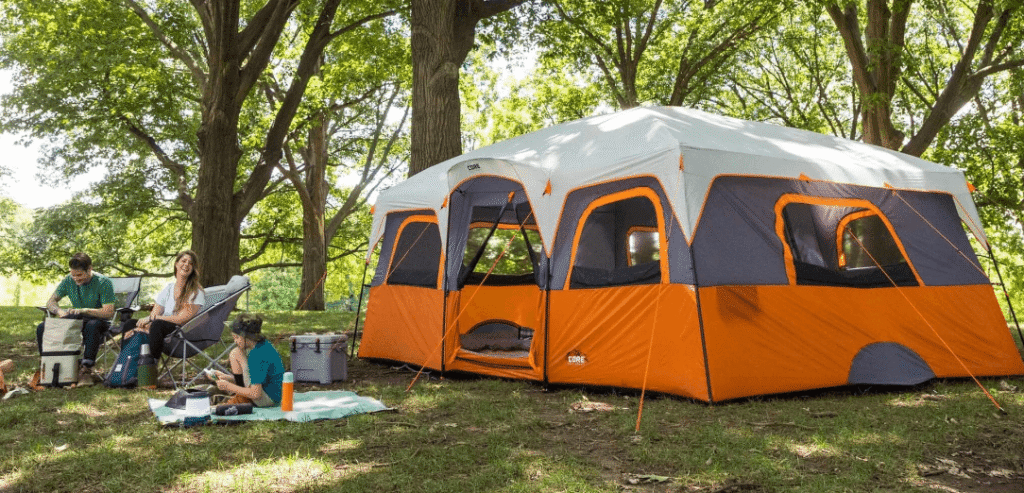
Have you ever seen a huge tent at a campsite and wondered what it is called? Big tents come in different shapes, sizes, and designs. They are commonly known as large camping tents, family tents, group tents, or multi-room tents. Some popular styles include cabin tents, bell tents, wall tents, and tunnel tents. Each type offers different features for outdoor adventures.
If you enjoy camping with family or friends, choosing a spacious tent can make your trip more comfortable. A large tent gives you extra room for sleeping, storing camping gear, and spending time together. Some designs also include separate rooms, tall ceilings, and living areas. This makes them a great choice for family holidays, weekend trips, and group camping.
In this guide, we will explain what big tents are called and explore different types of large camping tents. You will learn about their designs, sizes, main features, advantages, and common uses. We will also compare nine large camping tent options and explain what to consider before buying, including sleeping capacity, weather protection, setup time, materials, and available space.
Whether you need a large family tent or a comfortable shelter for group camping, this guide will help you understand your options and choose the right tent for your next outdoor adventure.
What Are the Big Tents Called?
Big tents are generally called large camping tents, family camping tents, group tents, or extra-large tents. Their names can also depend on their shape and construction. For example, cabin tents have tall walls, tunnel tents have a long curved design, and bell tents have a round shape with a central support pole.
These tents are designed to provide more room than standard two-person or four-person camping tents. Many large camping tents can accommodate six, eight, ten, or even twelve people. Some models also have room dividers, multiple doors, large windows, and separate sleeping areas.
The right name depends on the tent’s purpose and design. A large family tent is usually made for sleeping and relaxing, while a glamping tent focuses on comfort and a more luxurious outdoor experience.
If you are looking for a tent for a large family or group, you should consider its sleeping capacity, floor space, ceiling height, and weather protection before making a purchase.
7 Types of Large Camping Tents
There are several types of large tents available for camping. Each style offers different benefits depending on the number of campers, camping location, and outdoor activities.
1. Cabin Tents
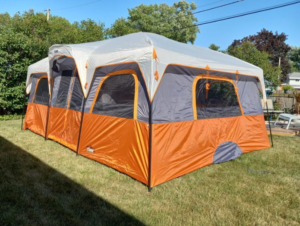
Cabin tents are among the most popular choices for family camping. They have nearly vertical walls and a tall roof, which provide plenty of interior space. Many models allow adults to stand comfortably inside.
These tents often include multiple rooms, large windows, and separate sleeping areas. Some also have room dividers that provide extra privacy for parents and children.
Main features:
-
Tall ceilings and upright walls.
-
Spacious sleeping areas.
-
Large windows for ventilation.
-
Room dividers in selected models.
-
Suitable for family and group camping.
Best for: Families who want extra space and comfort during weekend trips or longer camping holidays.
2. Multi-Room Tents
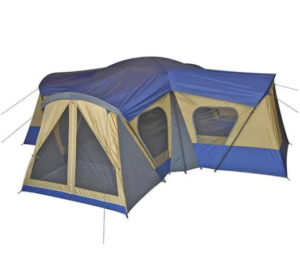
Multi-room tents are designed for campers who need separate sleeping spaces. They usually have two or more sections connected under one tent structure.
For example, parents can use one room while children sleep in another. This arrangement provides more privacy and helps keep sleeping areas organized.
Some multi-room tents also include a central living area where campers can store bags, change clothes, or relax when the weather is not suitable for outdoor activities.
Main features:
-
Multiple sleeping compartments.
-
Room dividers for privacy.
-
Large interior layouts.
-
Separate living and sleeping areas in some designs.
-
Useful for families and groups.
Best for: Large families and groups who want more privacy while camping together.
3. Bell Tents
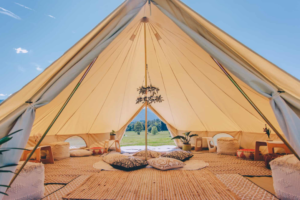
Bell tents have a round shape and a pointed roof supported by a central pole. They are often made from canvas or other heavy-duty fabrics.
These tents are popular for glamping because they provide an attractive design and a comfortable interior. Many campers use rugs, beds, chairs, and small furniture to create a relaxing outdoor space.
However, traditional canvas bell tents can be heavier than ordinary polyester camping tents. You should also check whether the fabric needs special maintenance.
Main features:
-
Round tent design.
-
Central support pole.
-
Spacious interior.
-
Canvas construction in many models.
-
Suitable for comfortable outdoor stays.
Best for: Glamping, family holidays, and campers who enjoy a traditional tent design.
4. Wall Tents
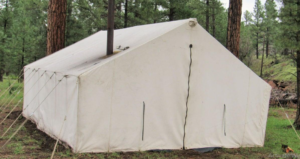
Wall tents are large shelters with upright walls and a sloping roof. They are commonly made from durable canvas and are often used for hunting trips, extended camping, and outdoor base camps.
Their rectangular shape provides useful interior space for sleeping equipment, storage, and other camping supplies. Some models can also accommodate a compatible stove system, but safe installation and proper ventilation are essential.
Wall tents are generally heavier and take more time to set up than small recreational tents. They are better suited to campers who need a sturdy shelter for longer stays.
Main features:
-
Strong rectangular structure.
-
Upright sidewalls.
-
Spacious interior.
-
Durable canvas options.
-
Suitable for extended outdoor stays.
Best for: Hunting trips, long camping trips, and established outdoor campsites.
5. Tunnel Tents
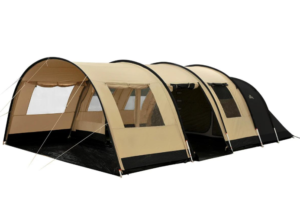
Tunnel tents have a long shape supported by curved poles that create a tunnel-like structure. Their design provides a good balance between sleeping space and shared living areas.
Many large tunnel tents include several sections, making them useful for families and groups. Some models also feature a covered entrance or vestibule where you can store shoes and camping equipment.
Properly securing the tent with stakes and guylines is important, especially in windy conditions.
Main features:
-
Long and spacious layout.
-
Curved pole structure.
-
Separate sleeping sections in some models.
-
Covered storage areas in selected designs.
-
Good use of interior floor space.
Best for: Families who need multiple sleeping areas and extra storage space.
6. Base Camp Tents
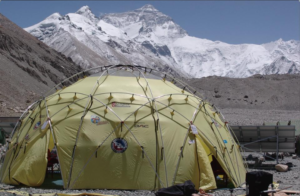
Base camp tents are designed for campers who need a larger shelter at a fixed outdoor location. They are often used for group adventures, extended camping, and outdoor expeditions.
These tents may have stronger frames and durable materials to support repeated outdoor use. Depending on the model, they can provide enough room for several people and their equipment.
However, base camp tents can be heavy and bulky. They are not always the best choice for backpacking or camping trips that involve carrying equipment over long distances.
Main features:
-
Large interior space.
-
Strong frame designs.
-
Suitable for group camping.
-
Storage space for outdoor equipment.
-
Designed for established campsites.
Best for: Group camping, outdoor expeditions, and longer stays at one location.
7. Glamping Tents
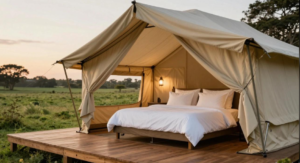
Glamping tents are large shelters designed to make outdoor stays more comfortable. The word glamping combines glamorous and camping.
Unlike traditional camping tents, some glamping models have enough space for beds, chairs, rugs, and other furniture. Popular designs include safari tents, bell tents, and large canvas shelters.
Some glamping tents are made for permanent or semi-permanent outdoor accommodation, while others are designed to be packed and transported.
Main features:
-
Spacious interior layouts.
-
Attractive outdoor designs.
-
Canvas and other durable fabric options.
-
Room for furniture in larger models.
-
Comfortable accommodation-focused designs.
Best for: Luxury outdoor stays, glamping businesses, and comfortable family camping.
9 Large Camping Tents Worth Considering
If you are searching for a large camping tent, you will find many options with different sizes, designs, and features. Some are made for large families, while others offer extra rooms, screen porches, or inflatable frames.
Below are nine products to consider when comparing large camping tents. Specifications are based on available product listing information; always confirm the selected Amazon size and version before purchasing.
1. CAMPROS CP 12-Person Camping Tent
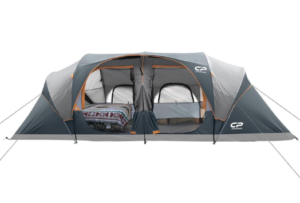
The CAMPROS CP 12-Person Camping Tent is a spacious cabin-style tent designed for large families and group camping. It offers a 20 x 9-foot floor area, giving campers plenty of room for sleeping bags, air mattresses, and camping equipment.
One of its useful features is the three-room layout. Two removable divider curtains help create separate spaces for family members. The tent also includes six mesh windows for airflow and two doors for easier access.
Its 72-inch center height provides useful headroom, while the included rainfly adds protection during rainy camping trips. The manufacturer advertises a setup time of around 10 minutes.
Specifications
| Specification | Details |
|---|---|
| Brand | CAMPROS CP |
| Capacity | 12 Person |
| Tent Type | Cabin Tent |
| Dimensions | 20 x 9 x 6 ft |
| Floor Area | 180 sq. ft. |
| Rooms | 3 |
| Doors | 2 |
| Windows | 6 |
| Material | Polyester |
| Weight | Approximately 26.5 lbs |
| Season | 3 Season |
| Setup Time | Approximately 10 minutes |
Pros
-
Large interior sleeping area.
-
Three separate rooms.
-
Six mesh windows.
-
Two doors for convenient access.
Cons
-
Large packed size.
-
Not suitable for backpacking.
-
Requires enough campsite space.
Best for: Large families and groups who need separate sleeping areas.
2. Large Family Camping Tent
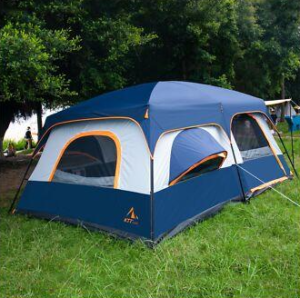
This second Amazon listing is another option to compare when shopping for a spacious family shelter. Before including it in your final buying shortlist, check the current product page for its exact brand, capacity, and floor dimensions.
When choosing this type of tent, pay attention to the number of sleeping compartments and whether the design includes a separate living area. A tent with removable room dividers can be useful when adults and children need different sleeping spaces.
Key Specifications
| Specification | Details |
|---|---|
| Product ID | B0DY4K3M3Y |
| Brand | Verify on Amazon |
| Capacity | Verify selected version |
| Tent Type | Verify listing |
| Floor Dimensions | Verify listing |
| Number of Rooms | Verify listing |
| Material | Verify listing |
| Weather Protection | Check rainfly and fabric rating |
| Best Use | Family camping, depending on model |
Pros
-
Another option for comparing large family shelters.
-
Check for separate sleeping areas.
-
Review the selected size before ordering.
Cons
-
Exact specifications need confirmation.
-
Available colors and sizes may vary.
Best for: Buyers comparing different family camping tent designs.
3. TIMBER RIDGE 8-Person Family Camping Tent
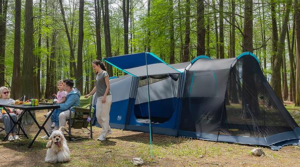
The TIMBER RIDGE 8-Person Family Camping Tent is designed for campers who want sleeping space and an additional screened area. Its long tunnel-style layout provides a main sleeping section and a screen porch for relaxing.
The tent measures approximately 20 x 8 feet and has a 76-inch peak height. Its screened porch can be useful for sitting, storing shoes, or enjoying the outdoors while keeping insects away.
It also features a removable rainfly, mesh ceiling, ventilation windows, and storage pockets. The fiberglass pole structure supports the tent, while its carry bag makes storage easier after a camping trip.
Specifications
| Specification | Details |
|---|---|
| Brand | TIMBER RIDGE |
| Capacity | 8 Person |
| Tent Type | Tunnel / Screen-Room Tent |
| Dimensions | 20 x 8 x 76 inches (height) |
| Floor Area | Approximately 160 sq. ft. |
| Rooms | 2 |
| Material | Polyester |
| Pole Material | Fiberglass |
| Weight | Approximately 32 lbs |
| Season | 3 Season |
| Setup Time | Approximately 15 minutes |
Pros
-
Large interior layout.
-
Separate screen porch.
-
Good ventilation features.
-
Useful storage pockets.
Cons
-
Heavy for backpacking.
-
Requires a larger campsite.
-
Fiberglass poles need careful handling.
Best for: Families who want a sleeping area and a separate screened relaxation space.
4. OUTZATA Inflatable Camping Tent
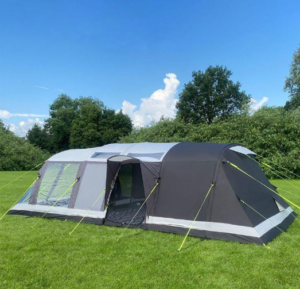
The OUTZATA Inflatable Camping Tent offers a different design from traditional pole-supported tents. Instead of a conventional pole frame, it uses inflatable air beams to support the tent structure.
Its listed floor dimensions are approximately 13.12 x 9.83 feet. The two-room version provides separate interior sections, which can help campers organize sleeping and storage areas.
The listing also mentions an electric air pump, protective bag, ropes, stakes, and a large tarp. These accessories can make setup and transportation more convenient.
Before purchasing, check whether the air pump is included with your selected version and whether the tent has the ventilation and weather protection you need.
Key Specifications
| Specification | Details |
|---|---|
| Brand | OUTZATA |
| Capacity | Verify listing |
| Tent Type | Inflatable Tent |
| Dimensions | Approximately 13.12 x 9.83 ft |
| Rooms | 2-room version |
| Frame | Inflatable Air Beams |
| Material | Verify listing |
| Included Accessories | Electric pump, tarp, ropes, stakes |
| Weather Protection | Waterproof features advertised |
| Best Use | Family and recreational camping |
Pros
-
Inflatable frame design.
-
Separate room layout.
-
Electric pump included in listed package.
-
Spacious floor dimensions.
Cons
-
Requires an air pump.
-
Needs checking for air leaks.
-
Not as compact as small backpacking tents.
Best for: Campers who prefer an inflatable tent design and want extra interior space.
5. WildFinder Inflatable Camping Tent
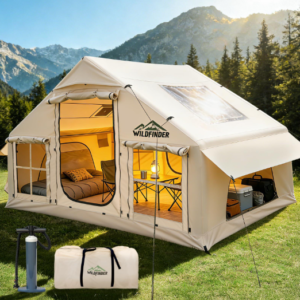
The WildFinder Inflatable Camping Tent is designed for campers who want a more comfortable outdoor shelter. Its inflatable structure offers an alternative to traditional pole-based tent designs.
This model is listed for four people and measures approximately 155.5 x 104.3 x 78.7 inches. Its interior offers space for sleeping equipment and basic camping supplies.
One interesting feature is its stove jack, which is designed for compatible camping stove installations. It also includes an AC port and convertible awning features. These additions make it an interesting option for campers who want more than a basic sleeping shelter.
Always follow the manufacturer’s instructions when using a heating appliance. A compatible stove, safe installation, and proper ventilation are essential.
Specifications
| Specification | Details |
|---|---|
| Brand | WildFinder |
| Capacity | 4 Person |
| Tent Type | Inflatable Glamping Tent |
| Dimensions | 155.5 x 104.3 x 78.7 inches |
| Floor Area | Approximately 116 sq. ft. |
| Material | Oxford Fabric |
| Waterproof Rating | PU3000mm |
| Weight | Approximately 45.2 lbs |
| Season | 4 Season (listed) |
| Special Features | Stove jack, AC port, awning |
| Warranty | 1 Year (listed) |
Pros
-
Inflatable frame design.
-
Spacious interior for its capacity.
-
Stove jack and AC port.
-
Convertible awning.
Cons
-
Heavy compared with smaller tents.
-
Requires inflation equipment.
-
Four-person capacity may be limited for larger families.
6. ALPHA CAMP 12-Person Camping Tent
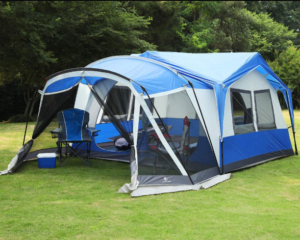
The ALPHA CAMP 12-Person Camping Tent is another large family shelter worth considering. Its product listing describes a three-room layout with a shade canopy, rainfly, and six large mesh windows.
The three-room arrangement is useful for families who want separate sleeping sections. Its mesh windows can also help improve airflow during warm camping trips.
A large tent like this needs enough space for pitching, staking, and securing its guylines. You should also check the packed weight and complete dimensions before deciding whether it suits your camping setup.
Specifications
| Specification | Details |
|---|---|
| Brand | ALPHA CAMP |
| Capacity | 12 Person |
| Tent Type | Large Family Tent |
| Rooms | 3 (listed) |
| Windows | 6 |
| Material | Verify listing |
| Rainfly | Included (listed) |
| Shade Canopy | Included (listed) |
| Dimensions | Verify listing |
| Weight | Verify listing |
Pros
-
Large advertised capacity.
-
Three-room layout.
-
Six mesh windows.
-
Shade canopy included.
Cons
-
Large campsite area required.
-
Packed dimensions need checking.
-
Setup may require two people.
Best for: Large families who need multiple sleeping sections.
7. CAMPROS CP 8-Person Camping Tent
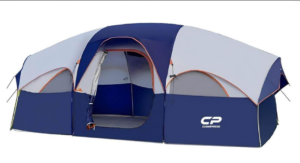
The CAMPROS CP 8-Person Camping Tent is a family cabin-style shelter with a rectangular layout. It is a smaller alternative to the 12-person CAMPROS model.
It measures approximately 14 x 9 feet and provides 126 square feet of floor space. The 72-inch center height offers useful room for sitting and moving around inside.
The tent also has five mesh windows and a divider curtain. Families can use the divider to separate the sleeping area or create more privacy during camping trips.
Its relatively straightforward pole design makes it an option for casual family car camping. However, the listed capacity should not be confused with comfortable space for eight adults and their luggage.
Specifications
| Specification | Details |
|---|---|
| Brand | CAMPROS CP |
| Capacity | 8 Person |
| Tent Type | Cabin Tent |
| Dimensions | 14 x 9 x 6 ft |
| Floor Area | 126 sq. ft. |
| Rooms | 2 |
| Doors | 1 |
| Windows | 5 |
| Material | Polyester |
| Weight | Approximately 17.6 lbs |
| Season | 3 Season |
| Setup Time | Approximately 5 minutes (advertised) |
Pros
-
Spacious rectangular floor.
-
Room divider for privacy.
-
Five mesh windows.
-
Lighter than some larger family tents.
Cons
-
One main door.
-
Limited privacy compared with larger multi-room models.
-
Not intended for backpacking.
Best for: Families who want an affordable cabin-style tent for weekend camping.
8. UNP 8-Person Tunnel Camping Tent
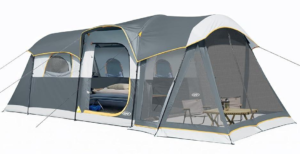
The UNP 8-Person Tunnel Camping Tent is designed for campers who prefer a long tent layout with a large interior. Its tunnel-style structure uses multiple poles to create a spacious sleeping and living area.
The product listing describes a 14 x 9-foot floor, approximately 180 square feet of space, and an 80-inch maximum height. It also features two doors, six windows, and a vestibule.
The additional vestibule can be helpful for storing muddy shoes, bags, and outdoor equipment away from the main sleeping area. Its large layout makes it more suitable for campsite camping than long-distance backpacking.
Specifications
| Specification | Details |
|---|---|
| Brand | UNP |
| Capacity | 8 Person |
| Tent Type | Tunnel Tent |
| Dimensions | 14 x 9 x 80 inches (height) |
| Floor Area | 180 sq. ft. (listed) |
| Doors | 2 |
| Windows | 6 |
| Vestibule | 1 |
| Material | Polyester |
| Pole Material | Alloy Steel |
| Weight | Approximately 32 lbs |
Pros
-
Spacious tunnel design.
-
Two doors.
-
Six windows.
-
Separate vestibule for gear.
Cons
-
Heavy for backpacking.
-
Requires proper staking.
-
Needs more campsite space than smaller tents.
Best for: Families and groups who need a spacious tunnel-style camping tent.
9. HINSTANT Automatic Expandable Camping Tent
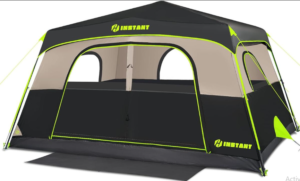
The HINSTANT Automatic Expandable Camping Tent is designed for campers who want a quicker setup process. Its pre-attached pole system helps the tent expand without assembling a traditional frame piece by piece.
The listed version measures approximately 14 x 10 feet, with a floor area of 140 square feet and a center height of 83 inches. The product listing advertises a setup time of around 60 seconds.
It also includes a rainfly, room divider, and storage bag. The expandable design can be useful for families who want a more convenient setup after arriving at the campsite.
Specifications
| Specification | Details |
|---|---|
| Brand | HINSTANT |
| Capacity | Multiple sizes available |
| Tent Type | Instant Cabin Tent |
| Dimensions | 14 x 10 x 6.9 ft (listed version) |
| Floor Area | 140 sq. ft. |
| Material | 190T Polyester Taffeta |
| Floor Material | PE Fabric |
| Weight | Approximately 26.5 lbs |
| Waterproof Floor Rating | 3500mm (listed) |
| Setup Time | Approximately 60 seconds (advertised) |
| Special Features | Expandable frame, room divider, rainfly |
Pros
-
Quick setup design.
-
Spacious cabin-style layout.
-
Room divider included.
-
Useful for family car camping.
Cons
-
Larger packed size.
-
Requires proper staking.
-
Capacity depends on the selected version.
Best for: Families who want a spacious tent with a quick setup system.
Comparison Table: 9 Large Camping Tents
| Product | Capacity | Main Design | Floor Area |
|---|---|---|---|
| CAMPROS CP 12-Person | 12 | Cabin | 180 sq. ft. |
| Large Family Tent B0DY4K3M3Y | Verify | Verify | Verify |
| TIMBER RIDGE | 8 | Tunnel / Screen Room | 160 sq. ft. |
| OUTZATA | Verify | Inflatable | Approx. 129 sq. ft. |
| WildFinder | 4 | Inflatable | Approx. 116 sq. ft. |
| ALPHA CAMP | 12 | Family / Multi-Room | Verify |
| CAMPROS CP 8-Person | 8 | Cabin | 126 sq. ft. |
| UNP | 8 | Tunnel | 180 sq. ft. |
| HINSTANT | Multiple | Instant Cabin | 140 sq. ft. |
How to Choose the Right Large Camping Tent
Buying a large camping tent is not just about choosing the model with the highest sleeping capacity. You should also consider interior space, weather protection, materials, setup time, and transportation.
Here are the most important things to check before buying.
1. Check the Tent Capacity
Tent capacity tells you how many people the manufacturer says can sleep inside. However, a tent advertised for 12 people may feel crowded when everyone brings sleeping bags, pillows, and personal belongings.
If you want more comfort, consider choosing a tent with a higher capacity than your actual group size.
For example:
-
A 4-person tent may suit two adults with extra gear.
-
An 8-person tent may work for a family of four or five.
-
A 12-person tent may be useful for larger families or groups.
Always check the actual floor dimensions rather than relying only on the number printed on the package.
2. Consider Interior Space and Height
A spacious tent should provide enough room for sleeping, changing clothes, and storing camping equipment.
Cabin tents are popular because their upright walls and taller ceilings make the interior feel more open. Tunnel tents can provide long sleeping areas and useful storage sections.
Before buying, check:
-
Total floor area.
-
Maximum interior height.
-
Number of sleeping rooms.
-
Space for air mattresses.
-
Available storage areas.
If you are camping with children, additional floor space can make the trip easier and more comfortable.
3. Look for Waterproof Materials
Rain protection is an important feature of any camping tent. A good large tent should have suitable fabric, a properly fitted rainfly, and sealed seams.
Check the waterproof rating when the manufacturer provides one. A higher hydrostatic-head rating generally indicates greater resistance to water pressure, but construction quality and seam protection also matter.
Look for:
-
Waterproof or water-resistant fabric.
-
Sealed or taped seams.
-
Full or well-fitting rainfly.
-
Waterproof bathtub-style flooring.
-
Secure doors and window covers.
Remember that no tent should be treated as completely stormproof. Always check the weather forecast and pitch your tent in a safe location.
4. Check the Frame and Pole Material
The frame helps your tent maintain its shape and stability.
Common tent pole materials include fiberglass, aluminum, and steel. Each has different advantages.
-
Fiberglass: Common in affordable family tents and generally easy to handle.
-
Aluminum: Lightweight and commonly used in higher-performance camping tents.
-
Steel: Strong and often used in larger or heavier shelter designs.
Inflatable tents use air beams instead of traditional rigid poles. They can offer convenient setup, but you need to inspect the air tubes and inflation system regularly.
5. Choose a Tent With Good Ventilation
Large tents can become warm and uncomfortable when airflow is limited. Good ventilation helps reduce condensation and improves comfort.
Look for mesh windows, roof vents, large doors, and mesh ceiling panels.
These features are especially useful when camping during warm weather. They also help fresh air circulate while keeping many insects outside.
6. Consider Setup Time and Portability
Large tents often take more time to set up than small camping shelters. If you frequently change campsites, a quick setup design can be useful.
Instant tents use pre-attached frames to make setup easier. Inflatable tents use air beams and a pump. Traditional cabin and tunnel tents usually require assembling poles and securing the structure.
Also check the packed weight and carry bag dimensions. A heavy tent may be fine for car camping but inconvenient when you need to carry it a long distance.
7. Look for Extra Features
Extra features can make a camping trip more convenient.
Some useful options include:
-
Room dividers for privacy.
-
Multiple doors for easier access.
-
Screen porches for relaxing.
-
Storage pockets for small items.
-
Electrical cord ports for campsite power.
-
Vestibules for shoes and equipment.
-
Shade canopies for outdoor sitting.
Choose features based on your camping habits instead of paying extra for things you may never u
Additional Information: What Buyers Should Know About Large Tents
Before choosing a large camping tent, it is helpful to understand a few more things about size, weather protection, setup, and maintenance.
Are Bigger Tents Always Better?
Not necessarily. A bigger tent gives you more room, but it can also be heavier and harder to transport. It may require more people to set up and a larger campsite.
If you usually camp with two or three people, a medium-sized family tent may be more practical than a 12-person model.
Choose a tent that matches your group size and camping style.
Can You Use a Large Camping Tent in Winter?
Some large tents are designed for three-season camping, while others are advertised for four-season use.
A three-season tent is generally intended for spring, summer, and fall conditions. A four-season tent is designed for more demanding weather, although the actual performance depends on its construction and intended use.
Do not assume every large family tent is suitable for snow or strong winter winds. Check the manufacturer’s recommendations before using it in harsh weather.
How Many People Are Needed to Set Up a Large Tent?
The number of people depends on the tent design and size.
A small instant tent may be manageable for one person, while a large cabin or tunnel tent is usually easier to assemble with two people.
For very large canvas shelters, additional help may be useful.
Always follow the manufacturer’s instructions and secure all stakes and guylines before using the tent.
How Can You Keep a Large Tent Clean?
Cleaning your tent after every trip helps maintain its condition.
Follow these simple steps:
-
Remove dirt, leaves, and other debris.
-
Clean the fabric using a soft cloth and mild soap when needed.
-
Allow the tent to dry completely.
-
Check zippers, seams, poles, and stakes.
-
Store the tent in a dry, well-ventilated place.
Never pack a wet tent for long-term storage because moisture can lead to mold and unpleasant odors.
Is a Large Tent Suitable for Family Camping?
Yes. Large tents can be useful for family camping because they provide additional sleeping and storage space.
Models with room dividers can help parents and children have separate areas. Screen porches and vestibules can also create extra space for relaxing or keeping outdoor equipment organized.
Frequently Asked Questions (FAQs)
1. What are the big tents called?
Big tents are commonly called large camping tents, family tents, group tents, or extra-large tents. Their specific names can include cabin tents, tunnel tents, wall tents, bell tents, and multi-room tents.
2. What is the biggest type of camping tent?
There is no single biggest type of camping tent. Large wall tents, cabin tents, multi-room family tents, and commercial glamping shelters can all offer substantial interior space. The biggest option depends on the model and its dimensions.
3. What is a 12-person tent called?
A 12-person tent is generally called an extra-large family camping tent or group camping tent. Many models feature multiple sleeping rooms, large windows, and separate interior sections.
4. What type of tent is best for a large family?
Cabin tents and multi-room family tents are popular choices for large families. They often provide tall ceilings, separate sleeping areas, and plenty of floor space.
5. What is the difference between a cabin tent and a tunnel tent?
A cabin tent usually has upright walls and a high ceiling, creating a room-like interior. A tunnel tent has a long shape supported by curved poles. Both can offer plenty of space, but their layouts are different.
6. Are inflatable camping tents good?
Inflatable tents can be convenient because they use air beams instead of traditional tent poles. They can also be quick to set up. However, buyers should check the inflation system, air-beam durability, repair options, and included pump.
7. How many people can sleep in a large camping tent?
Large camping tents can accommodate different numbers of people, often six, eight, ten, or twelve. Actual comfort depends on floor dimensions, sleeping equipment, and the amount of storage space required.
8. Are large camping tents waterproof?
Some large camping tents use waterproof fabrics, rainflies, and sealed seams. However, their protection varies by model. Check the waterproof rating, seam construction, and manufacturer’s weather recommendations before buying.
9. What is the best tent shape for family camping?
Cabin and tunnel tent designs are popular for family camping. Cabin tents provide more upright interior space, while tunnel tents can offer long sleeping sections and separate living areas.
10. Are large tents difficult to set up?
Some large tents require more time and effort than smaller models. Instant tents and inflatable tents can make setup easier, while traditional multi-room tents may require two or more people.
Final Thoughts
Big tents come in many different designs, including cabin tents, multi-room tents, tunnel tents, wall tents, bell tents, and glamping tents. Each style offers different benefits depending on your camping needs, group size, and available space.
If you want extra room for family camping, a large cabin or multi-room tent can be a practical choice. Tunnel tents are useful for campers who prefer long interior layouts, while inflatable tents offer an alternative setup system. Wall and bell tents are also worth considering for extended outdoor stays and glamping.
Before purchasing, compare the tent’s capacity, floor dimensions, interior height, waterproof rating, frame material, and setup requirements. Do not choose a tent based only on its advertised sleeping capacity. Think about the space you need for people, sleeping equipment, and personal belongings.
We hope this guide helps you understand what the big tents are called and makes it easier to find a suitable large camping tent for your next outdoor adventure.